Tuesday, June 23, 2015

My reflection on my Teacher Inquiry so far this year!

As part of our Teacher Inquiry here at NPS we need to share our new learning with others. We also need to reflect on the impact our inquiry has had on our students. Here is my reflection/evaluation/summary!

I feel that there have been no direct impact on my students however I know that I have made huge shifts within myself in terms of the way I view my role in teaching and as a person. I am a lot more comfortable with who I am, what I am doing in terms of teaching and leading and how I actually do it.
I found my first uni paper in a very long time, Teachers as Professionals challenging in terms of actually ‘doing’ it and the points it raised about my role as a professional.

The most powerful component for me was the reflective essay. Reflecting on my progress in thinking and developing a sound pedagogy was both enlightening and reaffirming. I have come to recognise and value a willingness to change and make change happen. This year started off with me questioning everything I believed in and did, as well as taking any dialogue as a direct criticism of me personally. This paper and other assistance have helped me look at myself with different eyes. I came to the realisation that I invest a lot of myself intimately with any questioning and this in turn becomes a fraught undertaking. As I read more during the ethics component of the paper I acknowledged that my values and ethics guide me and are important to me as a person. These also impacted on my self belief and expectations as a teacher. I needed to change the lens I viewed any discussion from me v them to ‘creator - challenger - coach’. This would enable me to step back, give myself space and change the purpose of the discussion. The more I did this, the easier it became.

I also had the opportunity to attend a  presentation by Dr Lester Levy at the Owen Glenn Building at Auckland University with Neil. The focus was communication and was timely as this was an area I had been focusing on in my personal reading. I am very aware of my own non-verbal communication and how this impacts on my responses to criticism and conflict. Dr Levy’s presentation was insightful and thought provoking - dovetailing nicely into the paper Teachers as Professionals and the counselling I was working through. Key points he shared were
  • The need for dialogue to be a mindset of possibility, as well as having the ability to paraphrase to understand and clarify.
  • Evoking people’s genuine voices, listening deeply, holding space for and respecting as legitimate other people’s views and broadening awareness and perspective are all key components of dialogic leadership.
  • Listening particularly to those who have no voice
  • Practice inquiry especially when you experience strong emotion

I also found that asking questions is also key to creating an outcome. So I am doing this more - making my questions count: “Tell me more…”, “Can you explain…”, “This is what I think you are saying…”. I’m not afraid to ask questions anymore and feel that I am more comfortable with equalising the power relationships that I have allowed to dominate my world.

When I came to writing my last assignment - a reflective essay about a particular experience of professional change that I have had, I found that I could write with honesty and open eyes. I also realised that I have been on quite a journey and it was valuable to take another look at what I have achieved with a different lens. Mindset is massive when it comes to being willing to make change happen and, to be totally honest this is an area that I have struggled with.

I have never read as much professional reading as I have in the last 12 months! I know that I have some ways to go yet but I am getting much braver at stepping away from the ledge out into the not so known!

Monday, May 11, 2015

Learning Powers

I have been part of a small team that has focused on building what Learning Powers look like for Ngatea Primary School students. We, as a staff had touched on what powerful learning looked like at our TOD at the beginning of the year.

Initially, as a team we looked at what learning was and then we took it to the staff.

  • What is learning?     Learning is the acquisition of knowledge, skills and values through study, experience or being taught.
At NPS, Learning Powers are the traits and strategies that help us achieve in our lifelong learning.


Our NPS Powers
  • I Care (social powers - values)
  • Learning powers (academic)
  • “High five” - brings our powers together. Can’t exist without the other.

The Learning Process/Capacity

  • Shifting from the unknown to the known
  • Unknown - recognising the problem, what is the problem?
  • Swamp - What do I know already? What do others know? Who can I ask? Try it from a different angle.

As a team we took what the staff shared and notes from previous meetings and collated the information coming up with headings of Connecting, Curiosity, Resilience, Creativity and Being Me. The next challenge was coming up with a statement under each. There was much discussion around these - creativity providing the most.


From here research was undertaken, exploring what each of these meant in an educational context and to deepen our understanding. Part of this was collecting student voice. Each team asked their students to brainstorm what they thought each of these meant. It was very interesting to see the similarity of language across the teams - from 5 year olds to 13 year olds.

Next step was to bring together the main points and present them in a visual format. We spent a long time playing around with design and images, looking for the best representation of what we thought each power was. We had to take care not to make them too 'adult' but capture the essence of what it is to be a NPS student with learning powers.

After much discussion, feedback and tweaks we came up with 5 designs we were happy with - they are now being polished and will be ready for launching later this term.

Onto the SWAMP process!


Saturday, November 29, 2014

Te Reo Maori Course Reflection

I have now completed the Level 2 Te Ara Reo Maori course! The course totaled 36 weeks comprising of units of learning covering Aotearoa, Whakapapa, Waahi, Te Waa, Mahi Ngahau, Haerenga, He Tikanga Marae and Tangata Rongonui. 

I am proud of what I have achieved completing this course. My main goals were 

  • To know and understand what a powhiri entails 
  • Feel comfortable on a Marae and the protocols involved
  • Confidently deliver my mihi
  • Pronounce names, place names etc, correctly
  • Build on my vocab and simple sentences/commands
  • Sing a variety of waiata
I have noticed a new respect from our Maori students as they realise I am genuinely trying to pronounce names, place names and other Maori language correctly. To be told by one student "I think you know more Maori than me, Mrs B" was pretty special. I realised that something as simple as the course I had taken (way outside my comfort zone!) had had a more far reaching effect than I ever thought.


I have already taken my next step - enrolling in Mauri Ora through the Open Waanaga!

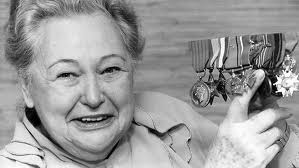
My final assessment involved a research project on someone whom I admire, and then presenting it to the class. I chose Nancy Wake.

  1. Mihi
Ko Te Aroha te Maunga
Ko Tikapa te Moana
Ko Waihou te Awa
Ko Barker te Hapu
Ko Whama te Marae
Ko Edens te Iwi
Ko Steward tōku Pāpā
Ko Peggy tōku Māmā
Ko Tipene tōku Hoa-Rangatira
Tokotoru āku tamariki
Ko Tracy ahau
Nō Waitakaruru ahau, engari key Ngatea ahau e noho ana
Nō reira,
Tēna koutou, tēna koutou, tēna tātou katoa


  1. Ko Toku Tangata Rongonui ko

  1. Whakatauki

Ahakoa he iti, he pounamu
Despite being small, it is of great value


  1. Ko Tona Whakapapa
Ko Tōna Whakapapa
Ko Charles Augustus tōna Pāpā
Ko Ella Rosieur tōna Māmā
Ko Henri Edmond Fiocca tōna hoa rangatira tuatahi
Ko John Forward tona hoa rangatira tuarua
Kāore āna tamariki

  1. Nga Umanga
He kairipoata a Nancy
He hōia Nō Engarangi i te pakanga ao tuarua
He hoia Nō te ope taua o Wiwi

  1. Nga Pumanawa
He tangata koi Nancy
He tangata taonga Nancy
He tangata katuarehi Nancy

  1. Waiata
Ko Nancy-Nancy
He tangata koi
He hōia Nō Engarangi
I te pakanga


Monday, November 3, 2014

What is a Powerful Learner?

The previous two weeks we have focused as a staff on what a 'Powerful Learner' is. Our first session involved Karla and Neil interviewing students asking them specific questions - "What is a Powerful Learner?", "What makes you Powerful Learner?", "What do you do when you get stuck?"

The most revealing and frustrating was the last question - "What do you do when you get stuck?"
Our Ss said they ask others like their friends or ask the teacher. They way they had answered gave the impression that we give them the answers when they ask us which is incorrect. We turn it back on the student by saying "What could you do...?".

The interviews were a real eyeopener, in terms of their perceptions of our role as teachers and of ourselves. I felt like I make no real difference, that you could put a cardboard cutout of me in our learning spaces and the responses would be no different! Food for thought and some real self reflection.

From here, our next meeting looked at what we as staff think makes a Powerful Learner.


And from our group:
  • creativity
  • resilience
  • tenacity
  • connected - learner
  • communicator - deliver, receive
  • empathy
  • persevering
  • risk taking - brave
  • discerning
  • curious
  • questioning
  • self awareness
  • willingness/self drive
  • emotional intelligence
  • collaborative
  • evaluative
  • reflective


There was a great deal of discussion around grouping of ideas and what Empathy is. We felt that because of our own upbringings and place in society, we would have little real understanding of what some of our students go through in their lives. Neil shared with us this clip Empathy vs Sympathy. This clip is a great way of differentiating between the two and how we can get caught in the 'sympathy' mode.
I realised that 'being there' is enough. Taking the time to listen is something I try to do, not only with students but the people around me - be it parents, staff or anyone.


Sunday, September 21, 2014

"Who Owns the Learning?" Alan November

As part of our PLD we have a selection of books that we can read to build our knowledge and understanding of Powerful Learners, Learner Agency, Teacher Agency and Future Focused education. I chose to read the "Who Owns the Learning?" by Alan November. 


Yes, I chose it because it was one of the smaller text but also because I am also reading "Pressing the Right Buttons" by Allison Mooney and "The Book Whisperer" by Donalyn Miller. 
Out came the highlighter pens and coloured post-it notes so at the end my book looked like a squashed hedgehog!

This is an easy read text that was full of stories that illustrated "that teaching our Ss to fully leverage 21st century skills in information and communication technologies extends well beyond introducing them to new tools."  (pg 89) Points raised struck a cord with me in terms of the path we are on as a learning community here at Ngatea Primary School.

What stood out for me:

  • Ss designing and publishing their own tutorials/workshops. We have identified this as our next step in Whetu - encouraging Ss to lead the way as this improves their learning outcomes and learner agency
  • There needs to be a shift in who 'controls' the learning! (S voice, learner agency, powerful learning)
  • "Anyone who can send an email can use technologies necessary to launch a class blog, wiki, and student scribe program." pg 45  NO EXCUSES!
  • Darren Kuropatwa's professional blog (adifference.blogspot.com) provides a wealth of resources, musings and thought provoking articles.
  • from Darren "As long as you're asking what's next, you'll get there. But never be content with where you're at." pg 47
  • Even being on Twitter, or reading the odd article - that's a start! It just might get you thinking about what could be next, then you give it a go and see what happens!!
  • Educating our Ss to think critically, not just accept verbatim what is presented on the internet. 
  • Enabling Ss to find, use and communicate information as part of a collaborative learning environment.
  • Ss should blog their learning experiences - helps with reflection (successes/weaknesses), organise thinking, receive feedback from a global community, sparks interactions that can benefit more than just the blogger. pg 55
  • Global Empathy! Developing Ss ability to understand and appreciate other points of view. pg 66
  • Authentic audiences are paramount for Ss to participate in. One example of this is www.fanfiction.net giving Ss a worldwide audience for creative work. 
  • "We improve both our own understanding and our ability to work with others when we gain insight into the what, why, and how of other perspectives - and learn to value them." pg 72
  • Importance and power of reflective conversations with ourselves, Ss, colleagues, and wider community. 

I am excited about developing some of these points further with the Whetu team and exploring Garth Holman and Michael Pennington's blog - teachersfortomorrow where they talk about their experiences in guiding Ss to build their online learning.


Saturday, September 20, 2014

Impact Celebration

This past Thursday (18th of September) Whetu and Whenua celebrated their Impact Projects with parents and invited guests. We had a great turnout, more than we expected. Each teacher leading an Impact group shared an overview of what their group had achieved during the term, including our TAs who were very nervous about speaking to a large group. The overview finished with the Drama Impact group performing their play.


Groups then went off to share their learning journey through posters, powerpoints and displays with their parents. There was a high level of engagement and a deep sense of pride from both Ss and Ps. We as teachers had very little to do as the Ss were the leaders and shared confidently each stage of their learning. 

My Gateway group are going to the upcoming BOT meeting to seek permission to continue with our gateway poles so our project is hoping to continue into Term 4.


We are very proud of them all and cannot wait to begin new projects next year.

Sunday, August 31, 2014

Impact (PBL) Reflection

Brenda (Team Leader - Whenua), Neil and Karla met to reflect on how Impact is going and what we need to consider for 2015.

Positives
Groups  working in the community, community coming in
Cross grouping with younger learners
Using TAs, planning alongside Teachers
Learners are engaged, talking about their learning
Talking to other adults about their learning
Teachers engaged
Flexibility to include other Impact groups, curriculum areas, etc
Good going into Lunchtime if away on a trip
Taking the time to get into teachable moments (rabbit holes)
Small groups of 14 good size to work with, any trips involve 2 other vehicles (incl. tcher)
Devices being shared, easy to research and follow any emails.
Speeches were much easier for Ss to write as they already had knowledge around their passion and could use this as the basis of their speech.

Considerations
Timing of various Impacts, some will carry on into Term 4
Amount of time spent each day
Some Impact projects could carry into following year (Gateway, entranceway)
At the beginning we did not need the whole time, as it progresses we have used the time.
Could be other times made available through the week - Tues/Thurs?
Budget or lack of one, who we can approach for money if needed
Next projects, build up a list “Needs, Opportunities, Interests” display in class
Support from other staff if you want to take your group out at a different time.
Adapting students learning programmes
Skills - Curriculum mapping
Parent support for trips

We need to gather student voice